
Public Space
The Direction of a Bench Shapes a Square's Warmth
A public bench's orientation, spacing, and surroundings quietly shape how people share a place.
2 min read
Public Space
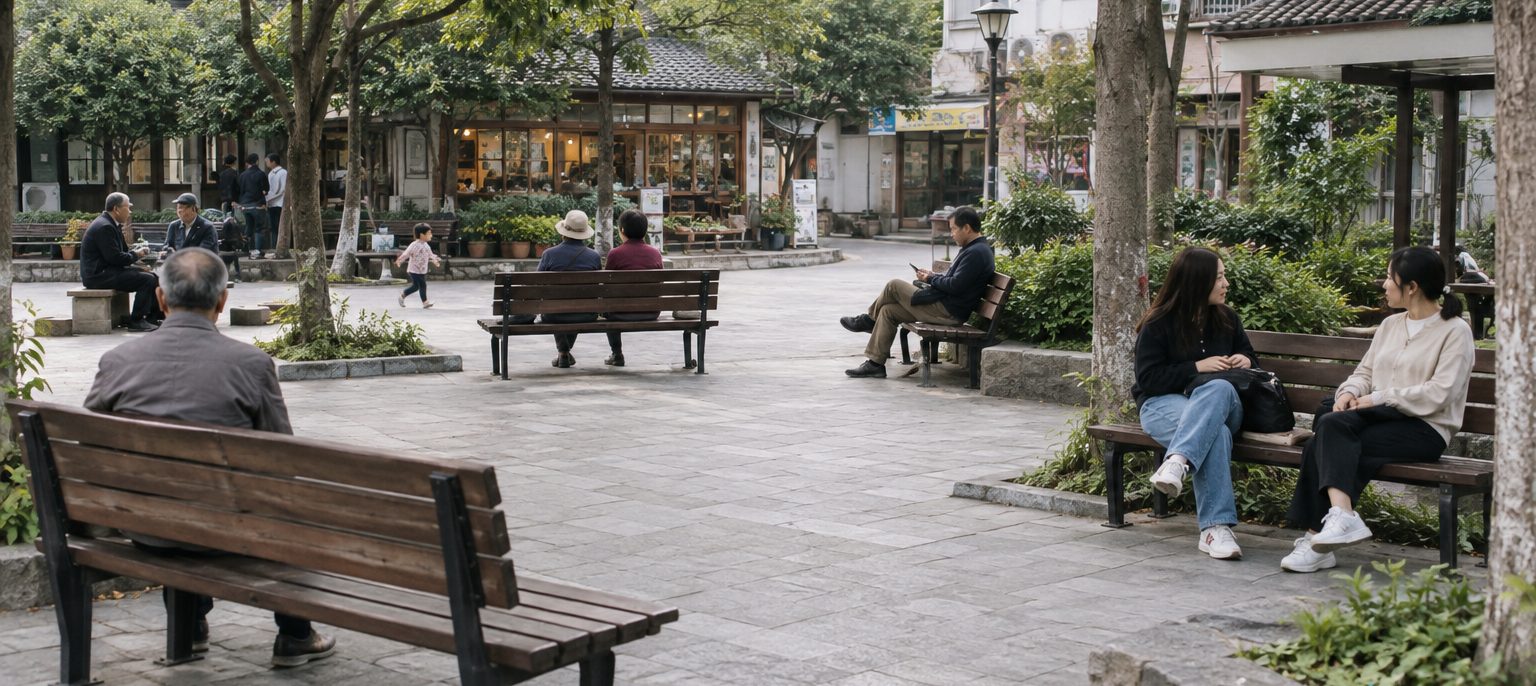
Choosing a seat means choosing a view
A square may have trees, paving, and plenty of benches yet attract few people who stay. Direction can matter more than quantity. Seats facing traffic expose people to noise and fumes. Seats facing away from play areas make caregivers turn repeatedly. An unshaded seat at noon invites little use.
A bench arranges sightlines, distance, and relationships. What people see, whether something shelters their back, and whether fast moving pedestrians brush past all influence how long they stay.
People often choose the edge
In a square, people tend to sit beside walls, trees, steps, or planters, leaving the open center empty. Edges offer reassurance: nobody passes unexpectedly behind them, while activities remain visible in front. They can join public life without becoming its center of attention.
Useful seating often works with trees, low walls, railings, or building fronts. Even without a formal bench, a planter edge at a comfortable height may be used naturally. Design a place where people can watch and join in.
Direction serves different users
A bench facing a play area supports caregivers. Seats side by side facing a street suit resting and watching passersby. Two groups at an angle encourage conversation among friends. Directly opposing seats can feel uncomfortably close for strangers.
Use changes with time too. Older residents may seek sun in the morning, while afternoon visitors look for shade. At dusk, seats near light and footfall become more appealing. Observe throughout a day to understand the relationship between direction, weather, and users.
What a good bench needs
Alongside orientation, check five conditions:
- View: Street life, children's activities, or nature should be visible, alongside more than parked cars.
- Shelter behind: Trees, walls, or planting can reduce interruptions from passing people.
- Microclimate: Offer summer shade, winter sun, and protection from strong wind.
- Distance: Leave comfortable space from bins, traffic lanes, and bicycle flows.
- Choice: Include places to sit alone and arrangements for two or three people to talk.
Armrests can help older people stand and define personal space. Dividing every bench into individual seats, however, excludes someone who wants a brief lie down. Public space should accommodate several ways of resting.
Observe seating at ten minute intervals
Choose a square or corner and sketch its seats, trees, roads, and entrances. Every ten minutes, note where people sit, how long they stay, which way they face, and whether they move. Add sunlight, wind, and nearby activity. After an hour, the pattern of comfortable places usually becomes clear.
For a consistently empty bench, try turning it or moving it two meters before adding more seats. A view of daily life, shade, and a position clear of the main path can change its use.
A welcoming square gives different people a place suited to their body, view, and preferred social distance. The direction of a seat is a small detail that can invite someone to stay.
Observation tip: Look from a real seated position. What is in front, what is behind, and is there shade at noon? These questions often matter more than the shape of the bench.