
Maps and Methods
How to Observe a Neighborhood in Ninety Minutes
A route, a record sheet, and ninety minutes can provide a first understanding of an unfamiliar neighborhood with ordinary everyday tools.
3 min read
Maps and Methods
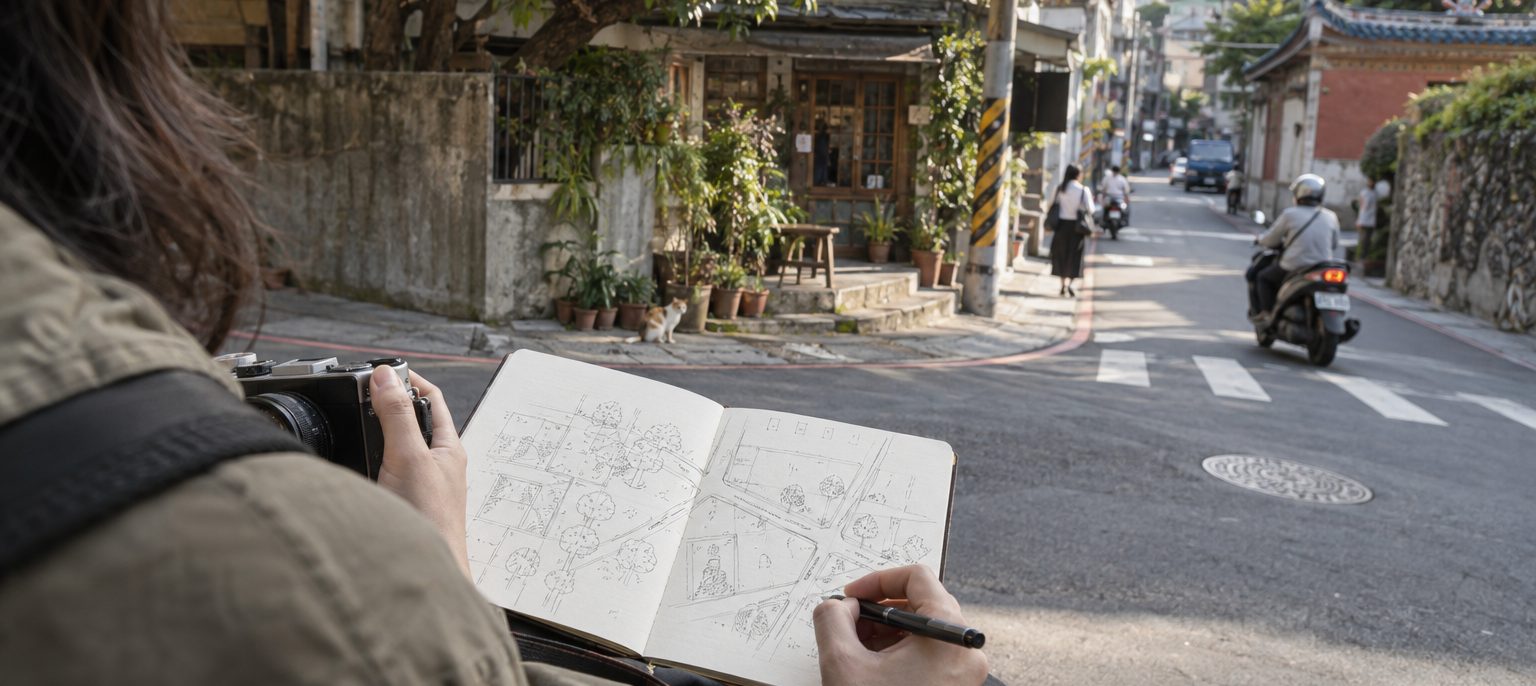
Give the walk a question
Neighborhood observation needs a clear question, though no specialist equipment is required. Ninety minutes can reveal a street's basic structure: where people arrive, where they slow down, which edges attract pauses, and what makes routes turn. Pair subjective impressions with records that can be checked.
Choose a small area before leaving. A main street five hundred to eight hundred meters long with one or two side lanes is usually more useful than an entire district. Pick a theme, such as walking comfort, children's activities, shop fronts, or nighttime safety. A specific question makes the volume of on site information manageable.
First fifteen minutes: get an overall impression
Walk the whole route at normal speed without stopping to photograph every detail. Record entrances, main nodes, road width, changes in use, and places where you want to pause. Mark three kinds of points on a map: attractions, obstacles, and questions.
Keep physical impressions in the record. Where does heat become uncomfortable? Where does noise feel oppressive? Where do you slow down without thinking? These sensations suggest what to measure and verify next.
Next thirty minutes: walk slowly in sections
Divide the route into sections of fifty to one hundred meters. For each, observe:
- Whether the ground floor contains open shops, residential entrances, or a continuous wall.
- The usable sidewalk width, including any obstructions.
- Shade, awnings, seats, and edges to lean against.
- Vehicle entrances, temporary parking, and conflicts with bicycles.
- Where people cross and whether those routes match formal crossings.
- Who stays, for how long, and what they do.
Photograph both details and wider views. Close views explain steps, paving, or signs; wider views show how they belong to the street. Pictures of attractive facades alone rarely explain how a place works.
Twenty minutes: stay at one point
Choose a node with rich activity or an obvious problem. Stand where you do not obstruct anyone. Every five minutes, record numbers and behavior, or sketch routes showing straight movement, turns, stops, and returns.
Staying still reveals patterns a moving observer may miss. People may cross along a consistent line between a bus stop and a market entrance. Delivery riders may gather because there is no designated waiting area. Repeated behavior deserves particular attention.
Fifteen minutes: ask and cross check
Where appropriate, ask a shopkeeper, guard, or resident a specific question: "Does water collect here when it rains?", "How late are people here at night?", or "Who brought this chair?" Short questions often produce answers closely related to the space.
Compare answers with physical traces. Watermarks, repeatedly repaired paving, and polished step edges can support or challenge what people say. Keep revising the initial interpretation as evidence arrives.
Final ten minutes: organize notes on site
Before leaving, find a quiet spot. Sort notes into confirmed facts, hypotheses requiring a check, and possible small improvements. Connect each suggestion with a specific place and user.
Later, create a simple problem, evidence, and impact table. For example: vehicles occupy the school entrance; twenty vehicles stopped in the walking area during fifteen minutes after dismissal; children had to enter the carriageway. This is easier to discuss than a general description of disorder.
Remain modest about the findings
Ninety minutes provides one slice of life. Weather, weekdays and weekends, and school terms and holidays all change a street. Revisit at another time and clearly record the date, weather, and duration of each visit.
Observation trains us to see familiar surroundings more clearly. A slower walk and more specific notes gradually reveal overlooked rules of everyday space.
What to carry: A base map, a pen, a phone timer, and patience with unfamiliar details are enough for a first neighborhood observation.