
The City at Night
Who Is the City Lit for After Nine?
Lighting, opening hours, and night work reveal how a city continues to function after daytime routines end.
2 min read
The City at Night
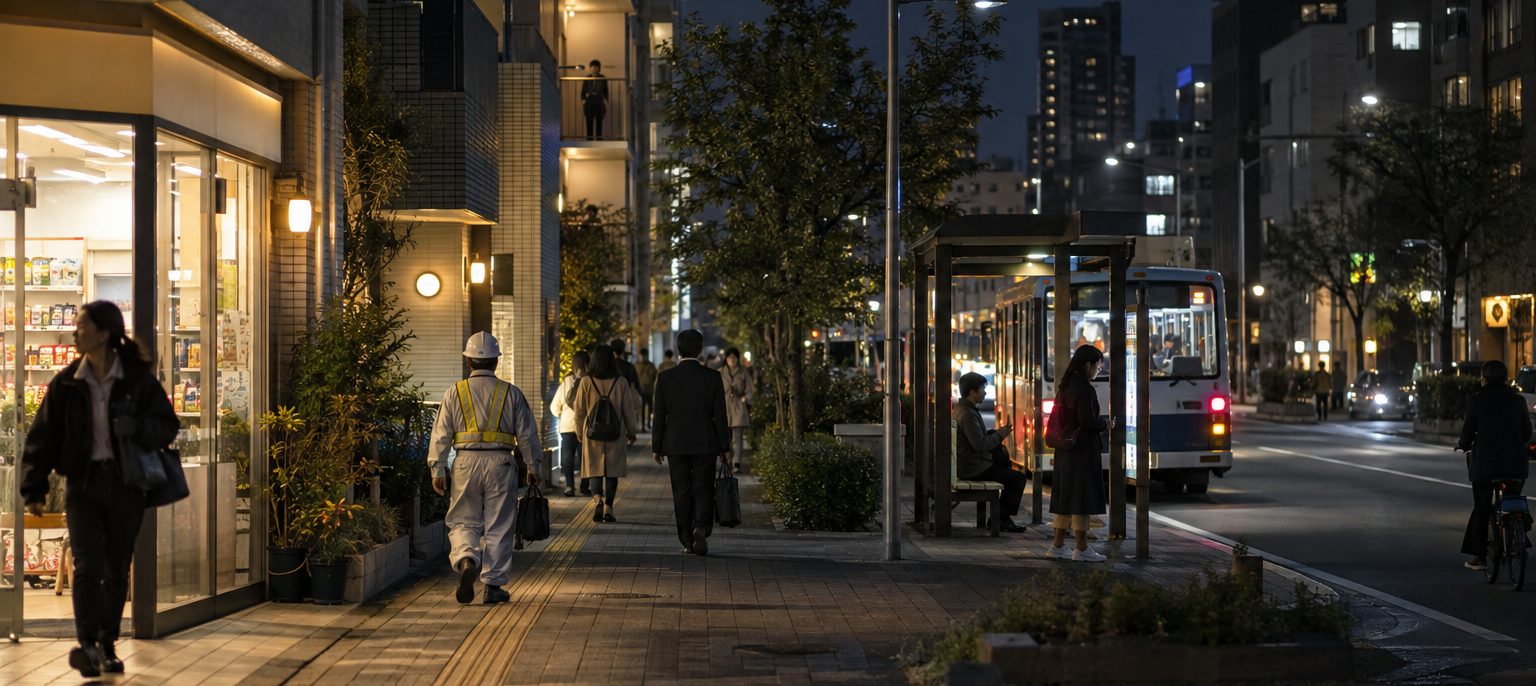
After nine, another city appears
By day, shops, footfall, and traffic suggest a street's prosperity. After nine, different questions matter: where are lights still on, who is working, can people get home safely, and where can night workers eat and rest? Different groups sustain a distinct system of nighttime life.
Convenience store staff, guards, healthcare workers, designated drivers, cleaners, and last bus drivers keep the city running while many people rest. They often use overlooked spaces: service entrances, hospital side streets, bus terminals, and temporary stopping points. Look along those ordinary routes as well as busy entertainment streets.
Light is one part of reassurance
Bright advertising screens create glare and make nearby darkness harder to read. Trees can obscure tall lamps while leaving the ground dim. Illuminated shutters still provide no indoor activity or visible attention.
Even, continuous light that reveals faces and changes in ground level usually feels more reassuring. A few open shops, visible residential entrances, and a route without dark gaps between bus stop and crossing also help. Everyday activity creates mutual awareness.
Nighttime access raises questions of fairness
Night services vary sharply between neighborhoods. Central areas may have plentiful transport and food, while outer residential areas offer a long walk after the last bus. Workers on modest wages can face expensive taxi rides; women and older people may take extra detours for safety.
Transport at night should also connect hospitals, industrial parks, logistics hubs, and large housing areas. Timetables, transfer waits, stop lighting, and final mile connections need to match night shift arrivals and departures.
Activity can create burdens
Restaurant streets, markets, and performance spaces bring energy alongside noise, waste, and blocked paths. Conflict often arises from ventilation equipment, loading schedules, frontage boundaries, and transport after closing.
Limit noisy equipment at appropriate hours, provide waste collection points, organize taxi pickup areas, and share cleaning responsibilities with businesses. Predictable rules help nighttime activity coexist with nearby residents' rest.
Draw a map of nighttime access
At nine, eleven, and one in the morning, record open toilets, convenience stores, pharmacies, food outlets, transport, and places to sit. Mark dark gaps, construction fences, long closed fronts, and difficult crossings. A map reveals breaks in provision that disappear during the day.
Observe people returning home alone, older passengers, riders, and cleaners alongside young consumers. Their stopping points, detours, and unavailable services help show whom nighttime spaces serve.
A city that remains dependable
A mature nighttime city can work through a reliable chain: transport at stops, light on routes, people nearby, essential services, and lively districts that respect others' rest. Lighting should provide direction and modest company within darkness.
Asking whom the city stays lit for examines the time boundaries of public services. Recognizing people living and working outside standard hours makes night planning part of urban fairness.
Observation tip: Walk a familiar route home again at ten in the evening. Record three places where you relax and three where you speed up. Consider light, street fronts, people, and traffic as possible reasons.