
Architectural Details
Arcades, Awnings, and Edges Where We Can Pause
Spaces between buildings and streets keep walking continuous in sun and rain, while making room for everyday pauses.
2 min read
Architectural Details
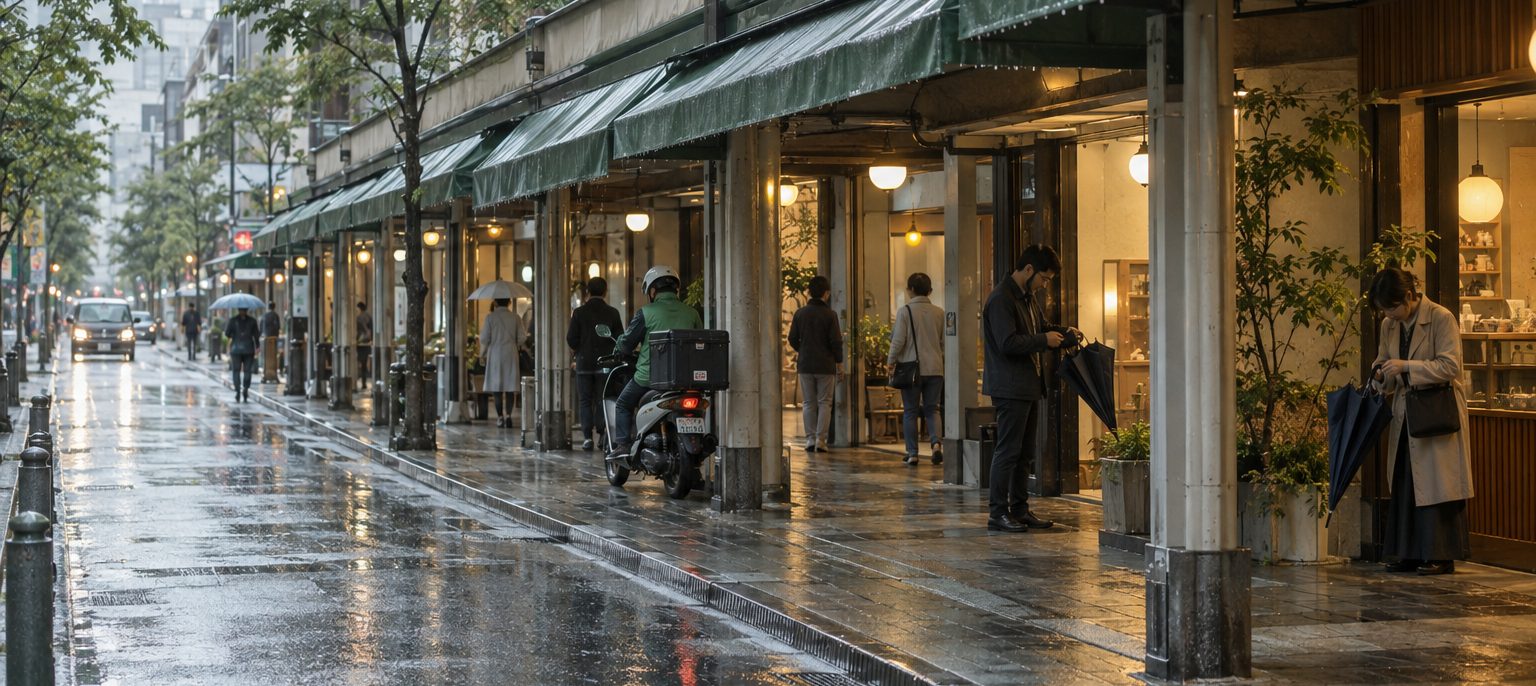
A building edge has depth
Plans divide building and street with a precise line. In a real city, lively places often occupy both sides of it: shade under an arcade, a shop awning, a doorstep, or a small stool against a wall. These spaces sit between enclosed rooms and an exposed street.
They provide a buffer for sheltering from rain, rearranging shopping bags, waiting for friends, and watching street life. A person can pause without entering a shop or standing in the main flow. Their value lies in allowing a smooth transition from passing through to staying.
Climate determines how an edge works
In hot, rainy regions, continuous shelter functions as walking infrastructure. Arcades keep sun and downpours away so streets remain usable. In colder cities, winter sun, wind protected entrances, shelter from snow, and sunny steps create seasonal public spaces.
Evaluate an awning beyond its width. Does runoff fall onto the main path? Do columns reduce room for wheelchairs and strollers? Are signs low enough to hit someone's head? Do neighboring awnings connect? A one meter gap in heavy rain can interrupt an otherwise sheltered journey.
Allow pauses while keeping movement clear
Shop displays and public passage often compete at the edge. A workable arrangement preserves a continuous accessible path and gives the building side a flexible zone for activity.
Breakfast tables can occupy it in the morning, waiting customers at noon, and open passage after closing. This flexibility can suit small shops better than permanent rails. Manage access, safety, and cleanliness with clear boundaries.
A doorstep has a social role
On older streets without formal seats, people use thresholds, steps, and planter edges. Shopkeepers chat during quiet moments, neighbors watch children, and couriers pause to check addresses. Such moments keep people present and build light familiarity among strangers.
Removing every usable edge can erase these routines. Accessible entrances can coexist with comfortable sitting edges: provide a gentle route in one part and suitable seating height in another, keeping both clear of the main path.
Observe an edge at four moments
Walk an arcade or awning route at sunny noon, in rain, before shops close in the evening, and at night. Record where people stop, how shops use frontage, whether cyclists enter the walking area, and where lighting breaks.
Photograph the continuous street front as well as individual buildings. A sequence reveals how awning heights, open and closed doors, and vacant premises shape walking rhythms. Thirty to fifty meters of comfortable edges can invite slower movement.
Arcades and awnings make building edges shareable in daily life. They help a city remain open through heat and rain, offering a little room to adjust pace while preserving walking access and the freedom to stay without spending.
Observation tip: Return to a street in the rain. Gathering crowds, colliding umbrellas, and detours around water reveal problems in edge design that a sunny visit may hide.