
Transport and Mobility
The Five Hundred Meters After the Metro Exit
Public transport continues beyond the ticket gates. The next five hundred meters determine how well a station connects with neighborhood life.
2 min read
Transport and Mobility
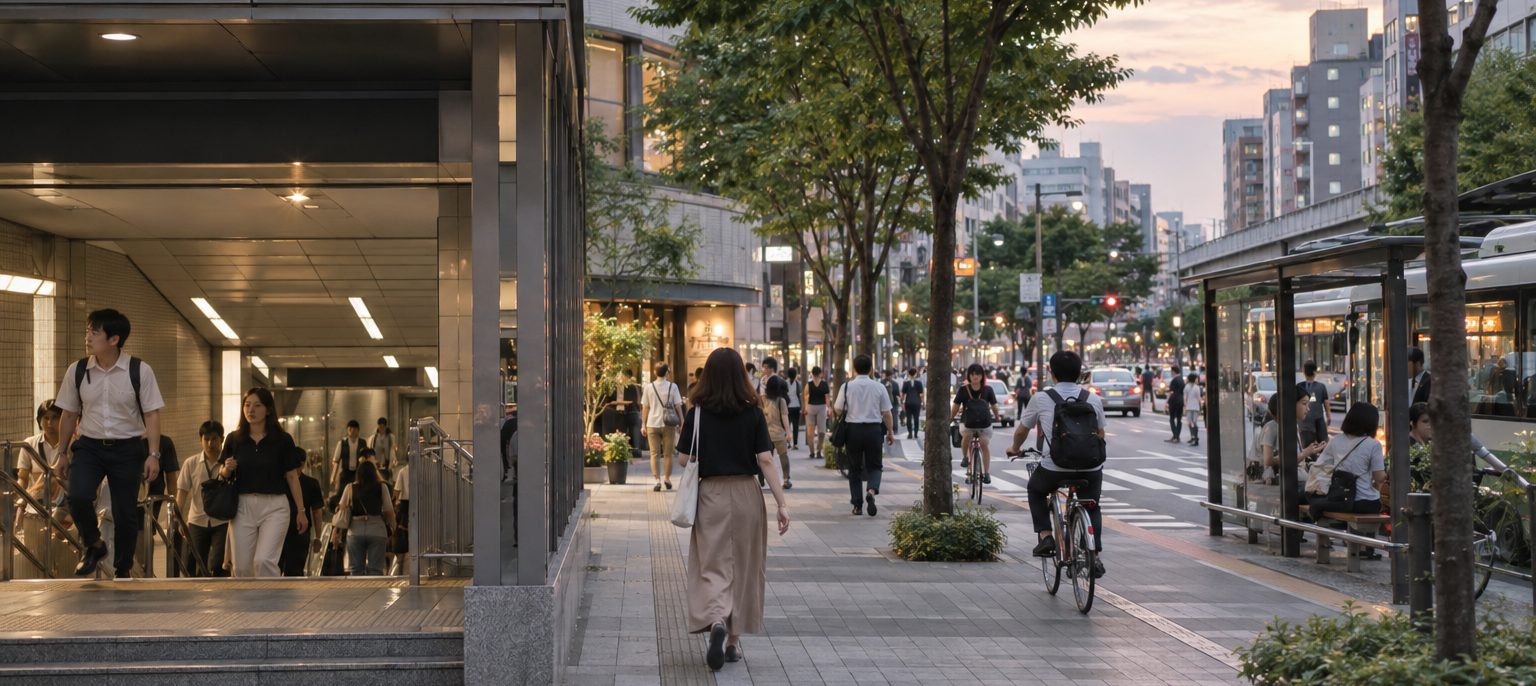
A commute continues after the gates
Transport plans often describe convenience through line speeds, transfers, and station coverage. Passengers leaving the gates still have the final five hundred meters to travel. This ordinary stretch determines how well the metro connects with daily life.
A poorly placed exit adds a wide crossing. Unclear signs send newcomers back and forth underground. Shared bicycles fill the sidewalk, pushing luggage and strollers toward traffic. Gaps in rain shelter can make even a short final walk unpleasant.
Equal distances can offer different journeys
One route has open shops, shade, and clear crossings, making it feel short and reassuring. Another follows parking lots and closed walls with little light at night; people may avoid it despite a shorter distance.
Turns, waiting, slopes, uncertainty, and the feeling of safety all influence perceived length. Measure a station's walking reach along real streets, accounting for roads that are hard to cross, walls, and changes in level.
An exit is an intense transition space
Within a few dozen meters, people emerge, orient themselves, make calls, open navigation, find bicycles, and wait for companions. Compress all these actions into a narrow sidewalk and conflicts follow. Provide a clear buffer: continuous movement space, identifiable waiting places, and bicycle parking separated from walking paths.
A nearby bus stop needs a visible sign, manageable crossings, connected shelter, and easy access to last service times. Smooth transfers begin when a passenger knows the next direction before leaving the station.
Walk the route in different roles
Try four conditions: a fast morning commute, pulling luggage, pushing a stroller, and walking alone at night. A commuter values a direct route. Luggage and strollers expose level changes, paving, and waits. The night walk highlights lighting, sightlines, and nearby people.
Record three times: gates to exit, exit to the first safe crossing, and exit to destination. This separates problems inside the station, at its edge, and in the wider street network. Total travel time between stations conceals these daily costs.
Small adjustments can make a clear difference
Move a hidden sign to the place where people choose a direction. Clear bicycles outside an exit, extend a pedestrian green phase, open a side gate, or fill two gaps in awnings. Small measures can save time across thousands of daily walks.
Over time, develop fine street connections and a mix of uses around stations. Breakfast shops, convenience stores, childcare, and parcel services let commuters combine errands within one journey. The metro can support a whole daily routine.
Has the station reached the neighborhood?
Useful exits face the directions people need. At peak hours, informal routes reveal their preferences: people cross barriers, walk through planting, or travel against a prescribed flow to shorten a trip. These actions can signal unmet spatial needs alongside management concerns.
Safe, clear, comfortable final walks carry the efficiency of rail transport to homes, offices, and neighborhood life.
Observation tip: Leave an unfamiliar station exit without opening navigation immediately. Record where you first hesitate. Signs usually need to appear at those decision points.