
Urban Renewal
Who Remains After Factory Renewal?
When industrial buildings become creative districts, examine both the architecture that survives and what the original users lose.
3 min read
Urban Renewal
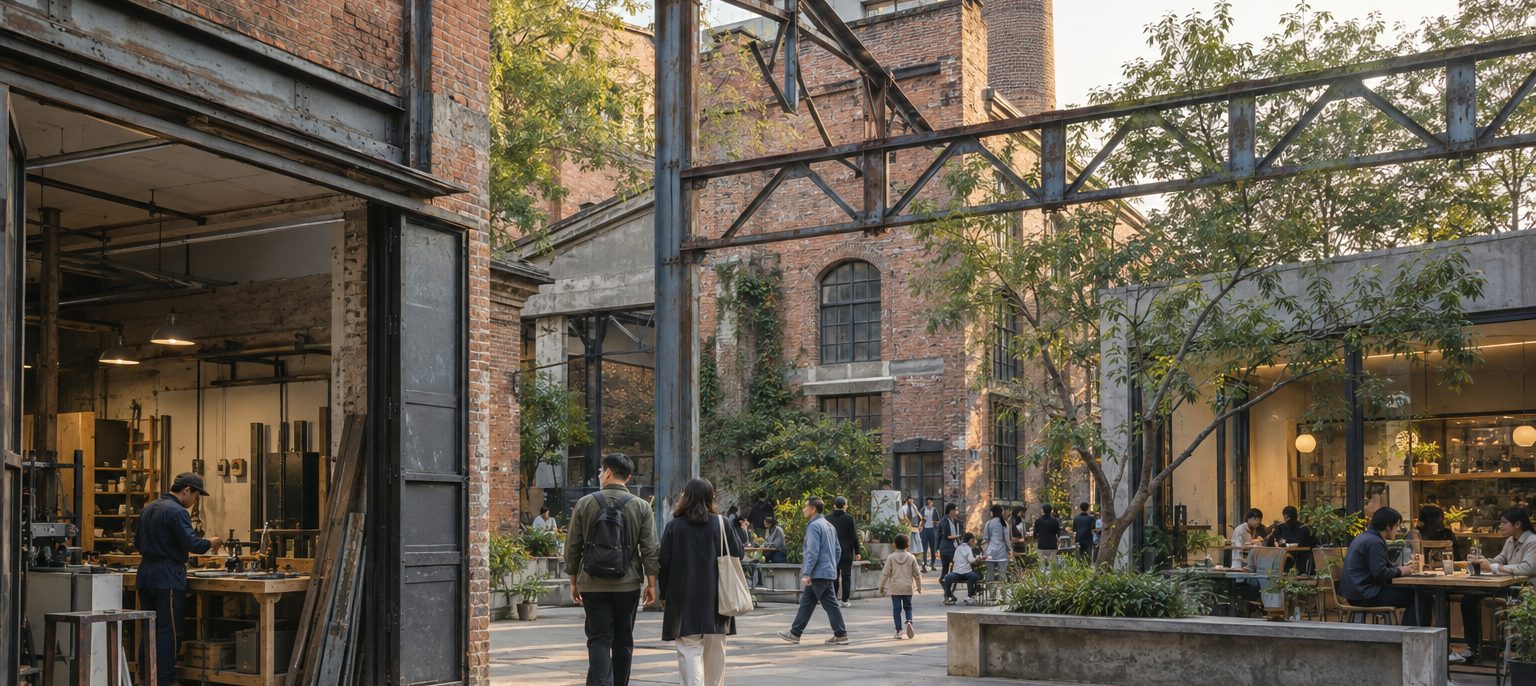
The buildings remain. Do the people?
Red brick walls, sawtooth roofs, and tall steel structures are cleaned and reinforced, then joined by cafes, exhibitions, and lighting. Old factories readily become showcase renewal projects. After the photographers leave, a harder question remains: is there still room for those who worked, lived, and ran small businesses here?
Industrial heritage includes patterns of production, workers' memories, neighborhood service networks, and the prices an area has supported over time. Preserving the shell while replacing every existing relationship can create a beautiful place to consume with few remaining ties to the neighborhood.
Renewal brings a reassessment of value
Public investment in roads, landscaping, and safety naturally increases an area's value. How that increase is shared matters. Rapidly rising rents usually displace small workshops, repair businesses, local restaurants, and young makers first. They gave the area working life and social connections, yet often struggle to compete with standardized retail.
Look beyond opening month footfall. Examine the tenants three years later: the share of local businesses, stability of leases, availability of small affordable units, and whether nearby residents can use public spaces without spending money. These measures say more about inclusion.
Preserve traces and explain their meaning
Industrial history can be presented without turning a site into a theme park. Selectively retain machinery, worn walls, freight tracks, and numbering systems, then explain how they related to people. What was made here? How was work organized? How did noise and dust affect neighbors? Where did workers arrive and leave?
Oral histories can help. Invite retired workers, residents, and former shopkeepers to mark canteens, bathhouses, nurseries, freight gates, and shops on a shared map. An exhibition can then describe a complete system of daily life. New users gain an understanding of the place they are entering.
Make affordable use part of the arrangements
Diversity needs durable arrangements. Reserve some space for affordable studios over the long term and offer small units that can be combined. Let local businesses move through gradual rent increases. Allocate community activity space through published criteria. Share resources among exhibitions, education, everyday services, and commercial tenants.
The transition matters too. Phased work, temporary stalls, and clear rights to return can reduce disruption. Asking tenants to leave and return years later at market rent often empties a promise of meaning. Fairness belongs in contracts, lease terms, and the proportion of space allocated.
Bring old and new users together
Some developments separate old communities and new districts: visitors spend inside while residents walk around the outside walls. Open entrances, continued alley routes, and courtyards where people can stay freely reconnect the site with its neighborhood. Community dining, repairs, children's activities, and public toilets may build more lasting relationships than a large art installation.
Successful factory renewal allows new economic activity while giving existing relationships a chance to continue. Extending a building's life is a beginning. Local memory, affordable space, and everyday access also deserve protection.
Asking who remains helps establish whether more people share the gains of change. Industrial heritage stays alive when it accommodates new work and daily life while recognizing those who shaped it.
Observation tip: Alongside photographing the buildings, record freely usable seats, original businesses, community entrances, and workspaces. Their presence helps distinguish an active neighborhood from a carefully staged setting.