Urban Renewal
Why Small Scale Renewal Is Often Harder
A smaller project can still be complex. Small scale renewal must account for real users, ongoing maintenance, and changing everyday agreements.
3 min read
Urban Renewal
A small project can still be complex
Adding benches, improving a corner, or clearing an alley looks lighter than a major development, so these changes are often called small scale renewal. Their size offers little protection from difficulty. They touch daily interests closely: whose doorway gets a bench, how many parking spaces disappear, and whether a vendor can continue trading. Every choice affects particular people.
A large project may proceed within a clear boundary. Smaller work often sits where ownership, management, and use overlap. A street authority may manage the space, a property company may maintain its facilities, and residents and businesses may use it daily. Leave any party out and the completed scheme may fail.
Finding a problem is easier than reaching agreement
A designer sees a lack of public space; a resident anticipates noise and litter. Young families want places for children; older residents prioritize rest and access. Shops welcome footfall while worrying about construction. These needs require coordination at specific times and places.
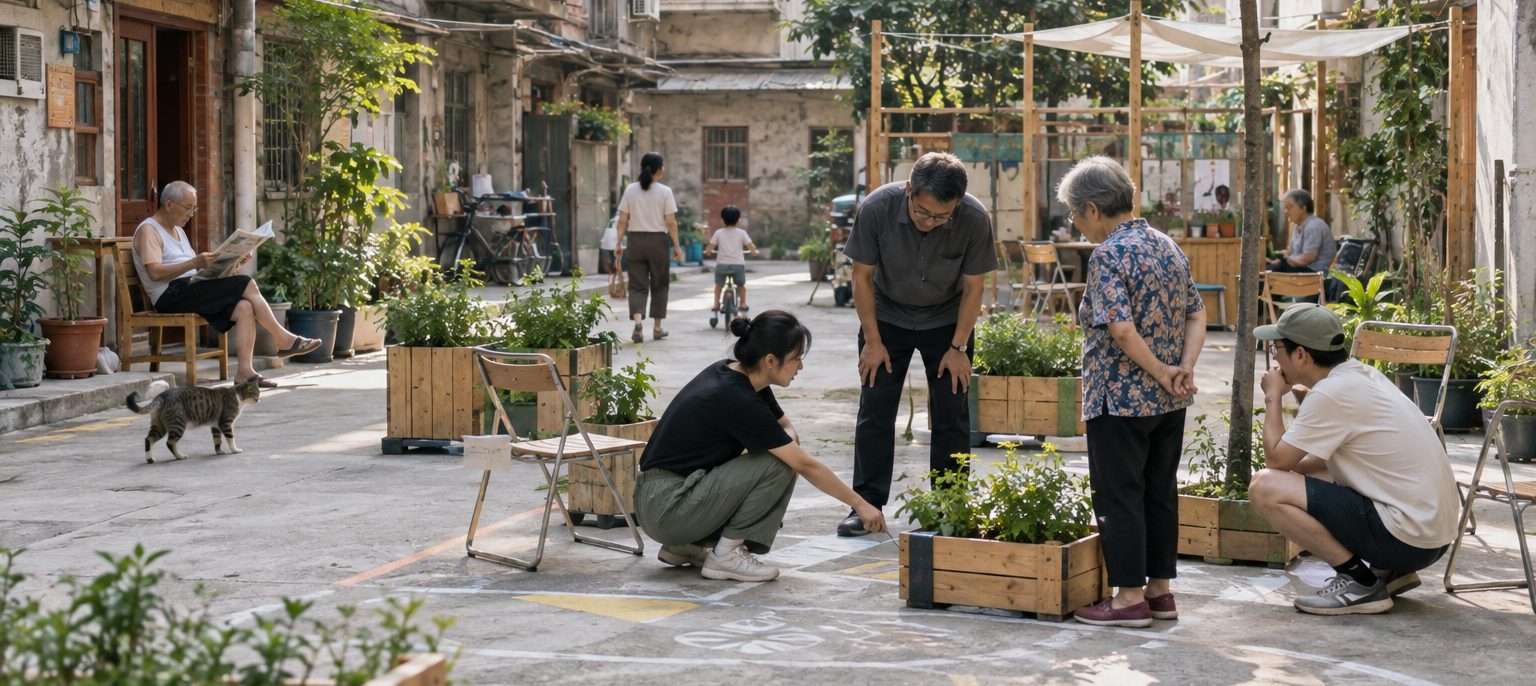
Useful participation goes beyond showing a rendering and collecting opinions. Test movable furniture on site, use tape to mark the proposed area, and invite different users to walk through it. Experiencing the actual scale helps people explain concerns and reveal conflicts missing from drawings.
Construction is a beginning
A common story begins with an attractive opening and ends six months later with broken furniture, dead plants, and renewed clutter. Maintenance responsibilities, funding, and feedback channels often went undefined.
Answer practical questions during design: who cleans, who waters, where a broken seat is reported, how an event is booked, and who manages shop displays. Durable, replaceable materials help more than elaborate forms. A project needs care to provide lasting value.
Allow the design to change
Lower costs and the ability to iterate are strengths of small scale renewal. Test planters, markings, and movable facilities for three months, record how they are used, and then make them permanent. If a bench causes nighttime disturbance, adjust its direction, number, or opening hours.
A trial needs evaluation criteria. Count users, but also observe older people and children, changes in movement conflicts, benefits to nearby shops, and affordable maintenance. Combine data and interviews to judge the result beyond a few lively photographs.
Understand the system around each small change
Moving a bin can free a path while adding distance for cleaners. Opening a side gate can shorten walks while complicating security and night management. Planting over underground services can create future maintenance difficulties. Small interventions still depend on information from multiple departments.
Coordination is therefore essential. Bring managers, maintainers, users, and local businesses to the same site plan early. Confirm constraints and responsibilities one by one. The process can feel slow while preventing repeated reconstruction later.
The difficulty comes from taking everyday life seriously
Small scale renewal seeks lasting improvements within limited budgets and complicated relationships, accepting that use will keep changing. A good project may look modest in photographs while saving residents a detour, providing a place to sit, or keeping their feet out of puddles.
Working so closely with daily life makes the task demanding. It also creates an opportunity for changes that are specific, testable, and capable of remaining part of the neighborhood.
Practical tip: Before making a facility permanent, try movable objects for a week. Watch who uses them, who detours around them, and who tidies up. Those answers can directly improve the final design.
Related
-
Who Remains After Factory Renewal?
Urban Renewal