Neighborhood Observations
The Overlooked Life of Back Lanes
Back lanes support deliveries, rest, repairs, and neighborhood connections. They also reveal details that city management often overlooks.
3 min read
Neighborhood Observations
A city extends beyond its main roads
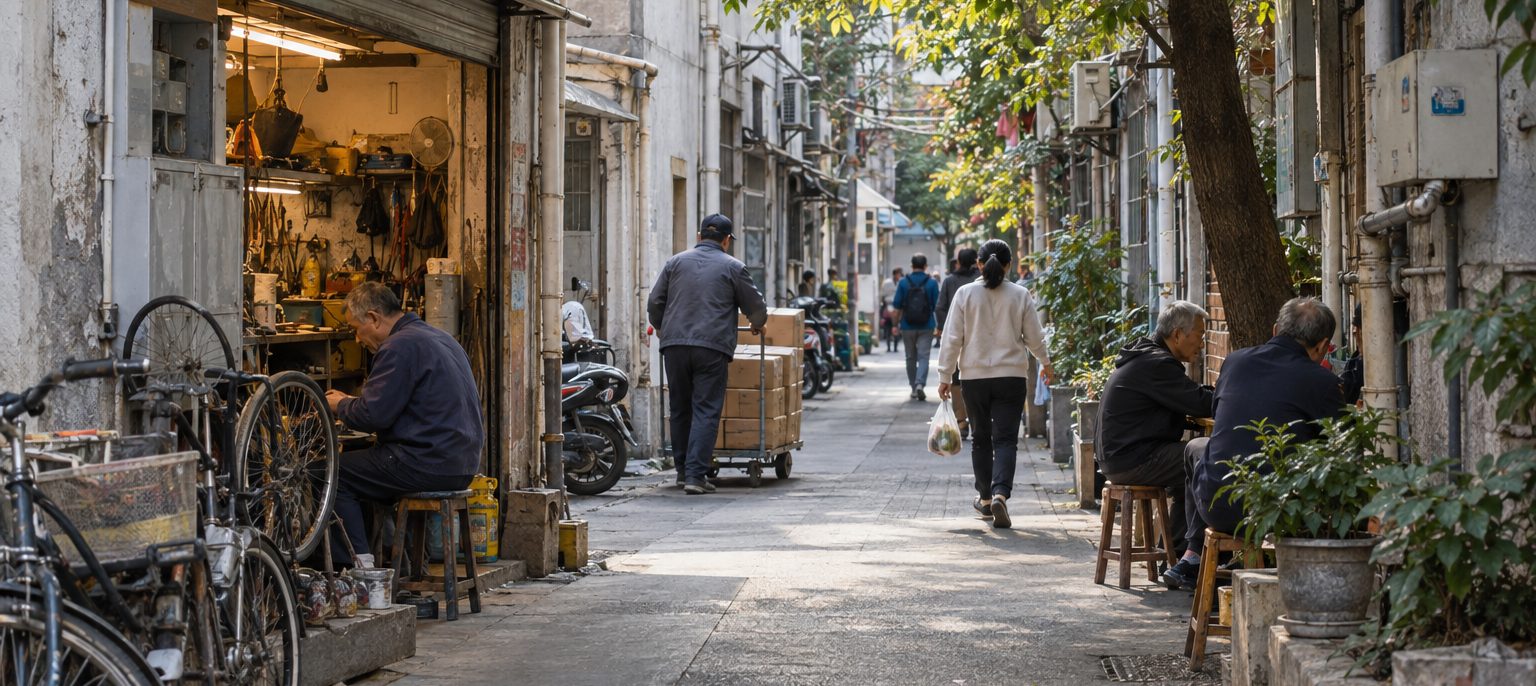
Broad avenues, landmarks, and tidy facades dominate images of a city. Much of everyday life takes place on the side streets and alleys behind them. Deliveries, repairs, waste collection, drying laundry, neighborhood conversations, and children's games after school all occupy these less polished spaces.
Back lanes form the fine seams of a city. They connect rear doors, side entrances to markets, and bus stops, while accommodating affordable services that struggle to fit onto main streets. Shoe repairs, key cutting, small restaurants, and recycling businesses rely on modest rents and flexible boundaries to support nearby residents. These places show how a city keeps running.
Look for the order within the clutter
On a first visit, scooters, boxes, drying racks, and temporary tables can appear chaotic. Stay a little longer and patterns emerge: breakfast stalls pack up in the morning, goods arrive at regular times, and residents keep a passage clear for ambulances.
Management based on a single photograph can treat every movable object as a problem. Clearing everything may produce a tidy street while taking away trading space and places for older people to sit. Effective management begins by identifying genuine obstacles to fire access, drainage, and movement, then assigning space and time to reasonable everyday needs.
An alley can be a shortcut
A fine network of lanes can shorten walks and spare residents a trip around large blocks. Gates, unauthorized structures, and long parked vehicles often close off that potential. Two communities that look adjacent on a map may require a detour of more than ten minutes.
Record each entrance's hours, width, and steps, along with the schools, markets, transit stops, and public spaces it connects. Opening a small gate during the day or clearing an obstructed passage can sometimes improve accessibility more effectively than building a new road.
Infrastructure problems appear here first
Drainage, lighting, waste collection, and utility maintenance in alleys often lag behind the main street. Rain brings standing water, night exposes dark corners, and bins occupy an already narrow pavement. With so little room, a misplaced facility amplifies conflict.
Begin improvements with routine maintenance: correct drainage slopes, fill gaps in lighting close to the ground, place waste collection points outside walking routes, and provide safe scooter parking and charging. These measures may attract less attention than a new facade, but they directly affect daily life.
Let an alley serve its neighborhood
Some renewal projects standardize shop signs, repaint walls, and introduce cafes and craft stores. The result photographs well, but rising rents can push out existing tenants. Local character gives way to a generic version of an old street.
A back lane's value lies in serving nearby people. Better hygiene and safety can accompany continued repair work, production, storage, and neighborly pauses. Modest design can repair paving, organize cables, and establish a limited, clear zone outside shop doors so existing life can continue.
Turn off the main street
Next time you pass a familiar shopping street, turn inward at a junction and walk for ten minutes. Notice how sounds and shop sizes change and where people recognize one another. Return through a different alley and draw its connection to the main street.
You may discover a dense network of mutual support in an inconspicuous place. Back lanes provide affordable, nearby, adaptable conditions for daily life. Preserving that fine grain helps a city accommodate a wider range of people.
Observation tip: When an alley looks untidy, distinguish danger, obstruction, and simple disorder. Each calls for a different response.
Related
-
Why Some Streets Make Us Slow Down
Neighborhood Observations